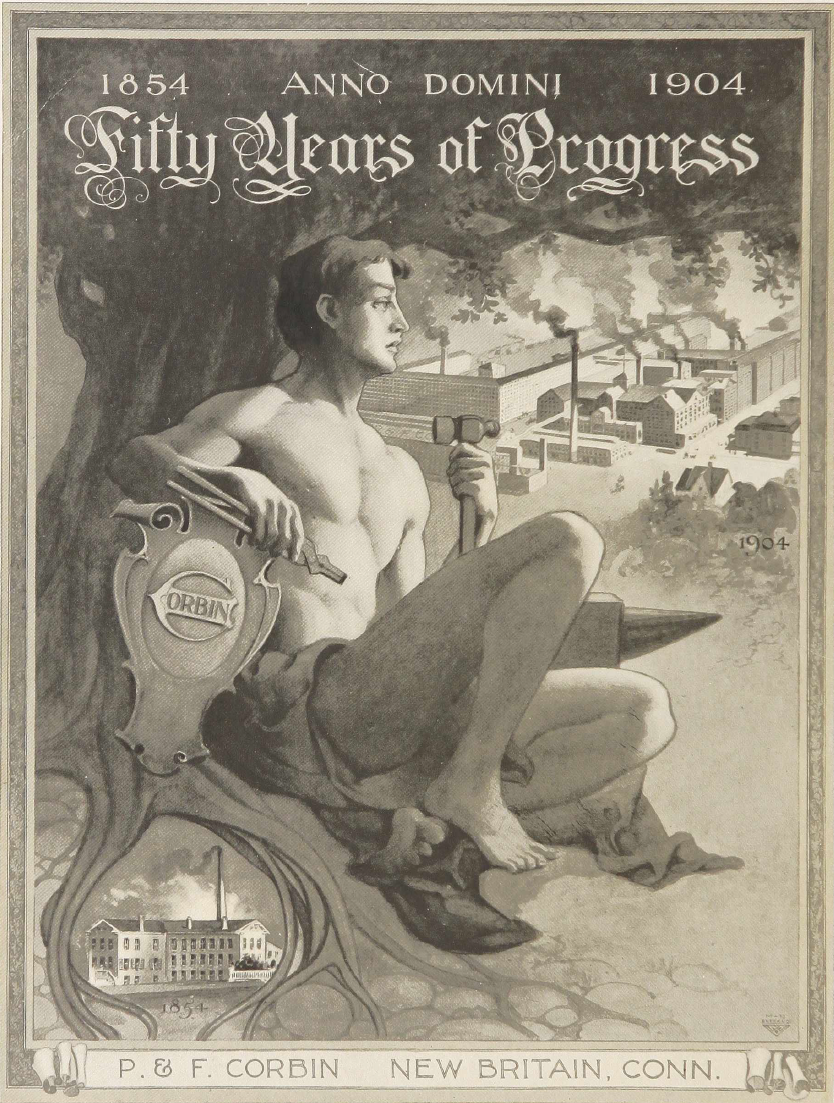
Note: The following is a republished excerpt from P. & F. Corbin’s History of the House of P. & F. Corbin. Published in 1904, it recounts the companies’ history on it’s 50th anniversary. We have made no changes to this excerpt and what you see is exactly how it was printed in 1904, albeit in a different medium.
History of the House of P. & F. Corbin
Illustrated: Including portraits of men notably identified with the growth of the house.
Issued in commemoration of the fiftieth anniversary of the founding of the house on the fourteenth day of February in the year eighteen hundred and fifty-four.
Author’s Preface
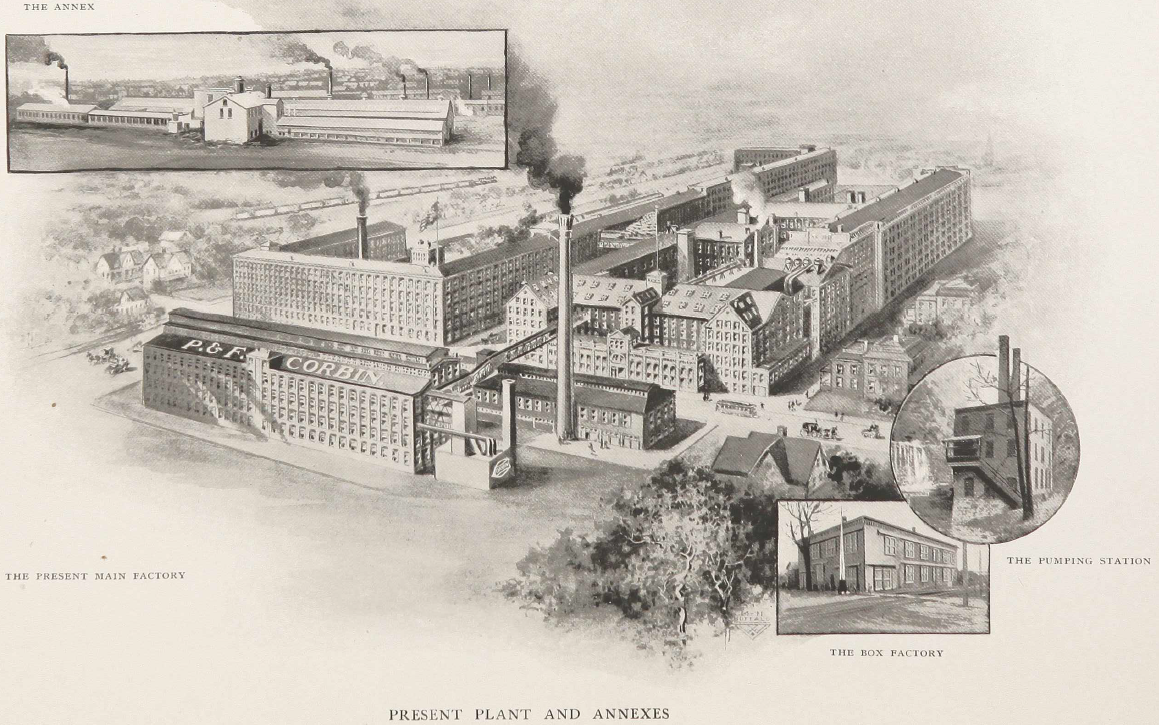
The visible exponents of a commercial institution like that of P. & F. Corbin are the men who conduct it, the buildings that afford it a home, and the goods which it produces and which furnish the reason for its existence.
Its history naturally consists in the relation of the events in which these factors appear conjointly and the circumstances which affect them. It is this which the follow pages attempt to set forth.
In writing the story the greatest difficulty has been to obey the injury to keep the background the personality of the men who have made the business. I have done all that I could in this direction, even to the extent of suppressing some occurrences that have had an important bearing upon the prosperity of the company and of minimizing the part in its growth and development taken by one or two of the persons who are still actively engaged in its affairs.
Yet, I trust that those who read can find between the lines that which I have not been permitted to write, and will be able to clothe the plain recital of facts and description of goods with somewhat of the living forces and personalities that have made the narrative possible.
-J. B. Comstock Continue reading