
Note: The following is a republished excerpt from P. & F. Corbin’s History of the House of P. & F. Corbin. Published in 1904, it recounts the companies’ history on it’s 50th anniversary. We have made no changes to this excerpt and what you see is exactly how it was printed in 1904, albeit in a different medium.
This chapter exceeds 9,000 words. To improve readability and make the content easier to follow, I have divided it into four separate posts. This is post 1 of 4.
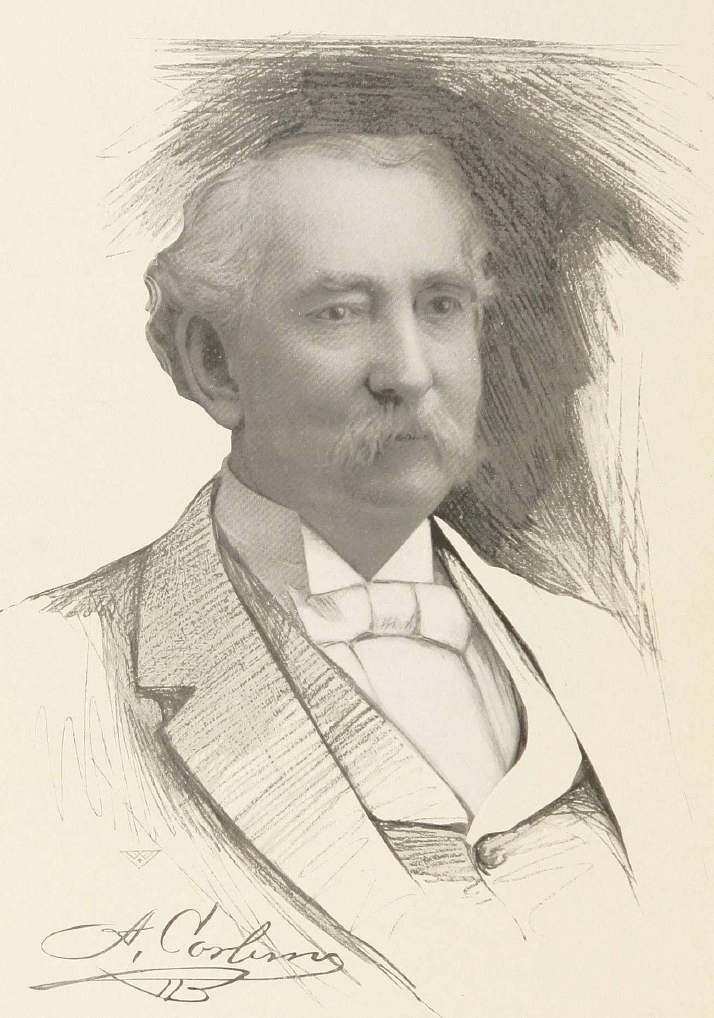
Andrew Corbin, First Vice-President
P. & F. Corbin – Corporation (1854-1880)
The need for a larger capital became more urgent as the business grew larger and the trade made demands for more goods than could be supplied with the facilities at hand, and after much deliberation and discussion it was decided to incorporate the business and sell enough stock to get the money needed.
The members of the firm of North & Stanley, who owned the premises P. & F. Corbin then occupied, and whose factory was under the same roof, had an excellent opportunity to learn of the way in which the business was done and the outlook for the future, and were very willing to buy stock in the new corporation as an investment. The relations of the two concerns were of a very friendly nature, and it was decided to make them more intimate and personal and to give the North & Stanley people an interest in return for the money they advanced for the enlargement of the business.
On February 14, 1854, the date whose fiftieth anniversary this book commemorates, seven men met in a little packing-room of P. & F. Corbin, the office being too small to accommodate so many persons at one time, and there the following articles of association were signed:
ARTICLES OF ASSOCIATION
”We, the subscribed, pursuant to the laws of the state relating to joint stock corporations, do hereby associate and form ourselves into a corporation, under the name of P. & F. Corbin, for the purpose of manufacturing, buying and selling articles of iron, of brass and of other materials commonly used in the hardware trade and of merchandising in the same, the manufacturing to be carried on in the town of New Britain and state of Connecticut. The capital stock of this corporation shall be fifty thousand dollars, divided into two thousand shares of twenty-five dollars each, of which we, the subscribers, take the number of shares set opposite our respective names.”
These men, who were thus the charter members of the company, were Philip Corbin, Frank Corbin, Waldo Corbin and William Corbin of P. & F. Corbin, and Frederic H. North, Oliver Stanley and John B. Talcott of North & Stanley. Of the seven, Philip Corbin, the president, and John B. Talcott, a director, are still identified with the company’s interests.
The company was thus capitalized at fifty thousand dollars and the stock was divided into two thousand shares with a par value of twenty-five dollars each. The three newcomers were sold seven hundred and twenty of the two thousand shares, leaving the controlling vote in the hands of the Corbins, who retained the active conduct of the business and carried it on with the same freedom as under the former conditions.
On February 21st, the officers were elected, F. H. North being made the president, Philip Corbin, secretary, and Frank Corbin, treasurer, the board of directors being composed of these three officers.
The rapidly-growing business multiplied the labor of management, which up to this time had been solely in the charge of Philip Corbin. At about this time he began to entrust to his associates more and more of the execution of the work, reliving himself of much of the care and responsibility connected with the production of the goods and the details of selling, and giving a large portion of his time to the general oversight of the business. There had not heretofore been much necessity for system in management or division of duties, William, Waldo, and Frank turning to with a will wherever their efforts were most needed, giving to Philip their cordial support and cooperation, but relying upon him for the planning of the work. Now, however, with a transfer of responsibility for different features of the business, there came a division of duties.
Frank Corbin, who had made a number of trips selling goods for the concern, was given charge of this portion of the work in the East. It was decided to open a sales office in New York and here he went to take the management of the store, taking with him brother, George, a name named John Rogers being hired to travel from the factory to cover the West, making the first trip into this region for the company. He proved an excellent salesman and did much in the way of introducing Corbin goods in this new and undeveloped territory.
William Corbin, a young man of twenty years, who had shown a special aptitude in the production of goods, was made the first superintendent and put in charge of the mechanical end of the business. A prominent part in the conduct of affairs was given to Waldo Corbin. While Philip Corbin was thus relieve of much of the responsibility for the detail connected with the work, he kept as closely informed regarding all branches of it as before, and was thus able to direct affairs intelligently and yet have more time and thought to devote to the large work of shaping the policy and directing the general course of the business. Its rapid growth made increased care and watchfulness necessary, and brought new problems constantly before him for solution, taxing his energies to the utmost. At the same time, he managed the sales for the territory covered from the factory and a portion of his time was spent on the road away from home.
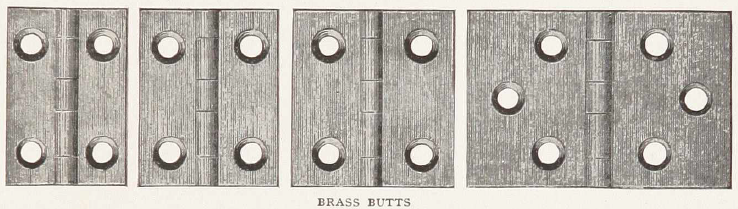
At about the time that the company was incorporated, wrought brass butts, which the little catalogue described as “Warranted Stronger than Cast, and True in the Joints,” were added to the line and put upon the market. These goods were the only made by one other American firm in this country, the Scovill Manufacturing Company of Waterbury, Conn., of which Mr. J. M. L. Scovill, the founder, was also the manager. In order to introduce the goods and induce dealers to buy them in preference to the older brand, P. & F. Corbin sold them somewhat below the Scovill prices, and Mr. Scovill several times sent a Mr. Partree to call upon P. & F. Corbin and expostulate with them for the prices they were making. Meeting with no success, the finally came to deliver an ultimatum, and meeting Mr. Philip Corbin on the little platform in front of the office door, told him that if P. & F. Corbin did not advance the price of brass butts the price would be put down to where the Corbin factory could not make them, even though it cut below the Scovill cost.
“Go back to Mr. Scovill,” said Mr. Corbin, “and tell him that when I was a boy and hunted muskrats I never shot a muskrat while it was under water, but when his head appeared I fired – and got him. Now, if Mr. Scovill wants to play a muskrat game he can, but every time his head shows above water I’ll bring him down,” and with this message Mr. Partree was dismissed.
A few days later Mr. Scovill appeared at the old Humphrey House in New Britain and asked for a personal interview with the Corbin managers. When Philip and Frank Corbin appeared he greeted them, “Which is the fellow who hunts muskrats?” The meeting wended with the most friendly feeling on both sides.
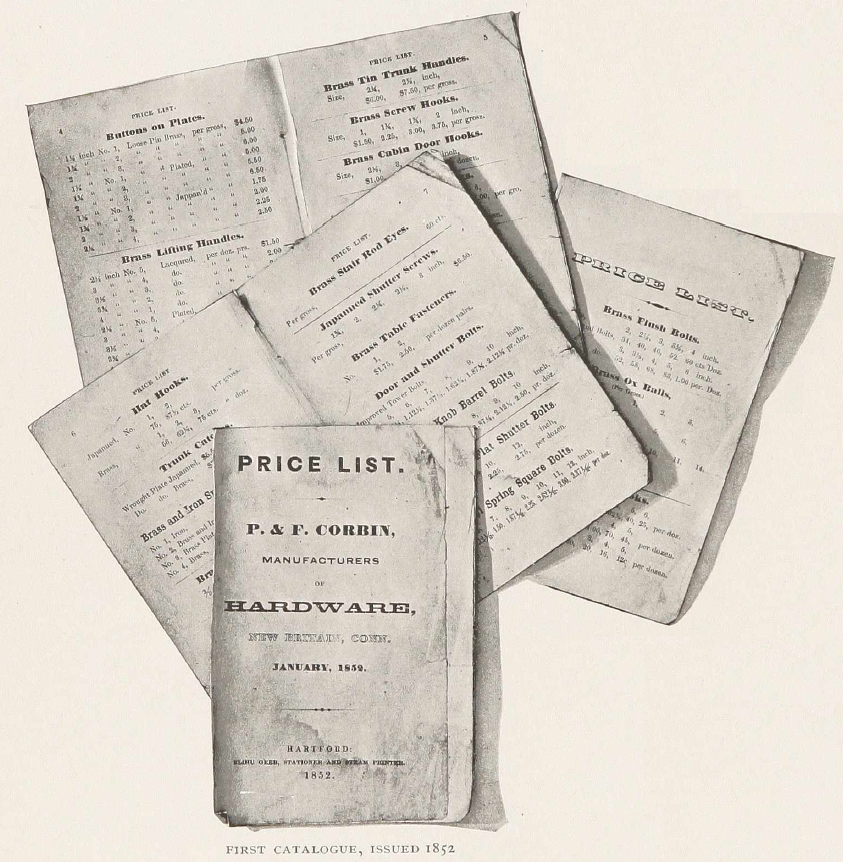
In 1849 or 1850, Corbin, Whiting & Co. issued the first price list of Corbin goods, a card which would slip into an ordinary envelope, with the price list upon one side and the firm’s name upon the other. In 1852, P. & F. Corbin, the copartnership, issued a little book with eight pages and cover, which listed all the goods of manufacture and included some bolts made by Frederick T. Stanley. In 1856, a somewhat larger book, with thirty-six pages and cover, was required, and the articles listed comprised, in addition to the goods already mentioned, full assortments of cupboard catches, fancy French window catches, closet and trunk catches, chain bolts, cabin door hooks, picture hooks and nails, looking-glass hooks, wardrobe and coat and hat hooks in large variety, sash fasteners and lifts, drawer and drop handles, door pulls, shutter screws, house, tea, and call bells, bird-cage hooks, door knockers, a full line of the window-shade and curtain fixtures then in use, with rack pulleys and roller ends, and tassel hooks, and a large assortment of piano-forte, coffin, railroad-coach, and wardrobe wrought butts. The finishes had grown in variety and included olive green, bronze, brass, ormulu, burnished and “dead,” silvered, iron with antique bronze finish, japanned and “electro-plated.” Wrought plates to cupboard catches and wrought curtain fixtures foreshadowed the time when the drop-hammers should displace the foundry in many goods. In almost all of these goods P. & F. Corbin were first – or among the first – of American manufacturers to put them upon the market, in pursuance with their policy to so far as possible avoid domestic competition.
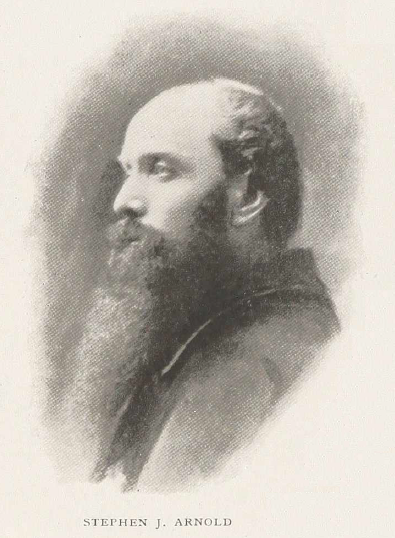
The lifting handles, first made in 1850 (Corbin’s present No. 516 line), were also used in those days for coffin handles, and P. & F. Corbin sold them for that purpose. They soon added other patterns and the assortment grew rapidly, particularly after 1857, at which time Stephen J. Arnold was engaged as a designer of these goods. he had previously in a similar capacity worked for Bailey & Brainard of Middle Haddam, manufacturers of coffin trimmings, and the old Corbin catalogues show many elaborately decorative patterns of handles which he designed. These were at one time one of the principal articles of manufacturer, but as the business became specialized and was taken up by concerns confining their efforts to this single line, the sales dwindled, and in 1871 the goods were taken off the list of merchantable articles, the old original lifting handles alone remaining.
In front of the 1856 catalogue appears a notice, reading:
TERMS
Your Note of Six Months.
N . B. – All accounts less than one hundred dollars must be closed 1st July and 1st January, by cash, less discount for the expired time at the rate of ten per cent. per annum.
P. & F. Corbin,
New Britain, Conn.
Similar notices appear in later books until after the war, when the printed terms of payment were changed to thirty days net cash, payable in funds at par in New York or Boston. There were still a number of accounts which were carried on the old basis of semi-annual payments, and the last few accounts of this kind were changed to the present commercial basis only a short time ago.
The basis for payment made it additionally difficult for a concern with limited capital to do business. Notes were very generally notwithstanding the inducement of a large cash discount, and these notes were discounted by the banks when the holders were in need of money and the banks had it to loan.
In addition, the fluctuating value of the currency then used was a constant source of annoyance and anxiety. Notes were issued by individual banks at their own discretion and the value of such notes varied with the standing of the bank that issued them and the distance from the place where the bank was located. The notes of good New York banks passed at their face value, good Philadelphia notes were subjected in New York to an exchange discount of from five to seven per cent., and the New York exchange discount on good Chicago banks ranged as high as twenty-cent per cent., with a lesser deduction for near-by cities.
A “Bank Note Detector” was published, giving the value of the notes of various banks, and this formed the standard of payment. If, for instance, a guess at an inn tendered a bank note in payment for his bill, mine host would consult his bank note detector and deduct the discount named therein before accepting it – or refuse it altogether if the standing of the bank was not satisfactory to him. It was, therefore, of importance to get the right money, and the matter of collections was thus burdened with an additional necessity for precaution. This condition existed until the United States Government issued the greenbacks at the time of the Civil War.