The Von Duprin Game Changer, Part 1: The Power of Three

On December 30th 1903, thirty-three year old Carl Prinzler was in Chicago for business. With his business concluded, Carl found himself delayed in getting home. Deciding to pass the time, he planned on getting a ticket to see Klaw and Erlanger’s “Mister Bluebeard” production at the new Iroquois Theatre. But at the last minute, a train ticket came available and he rushed to get home to Indianapolis…

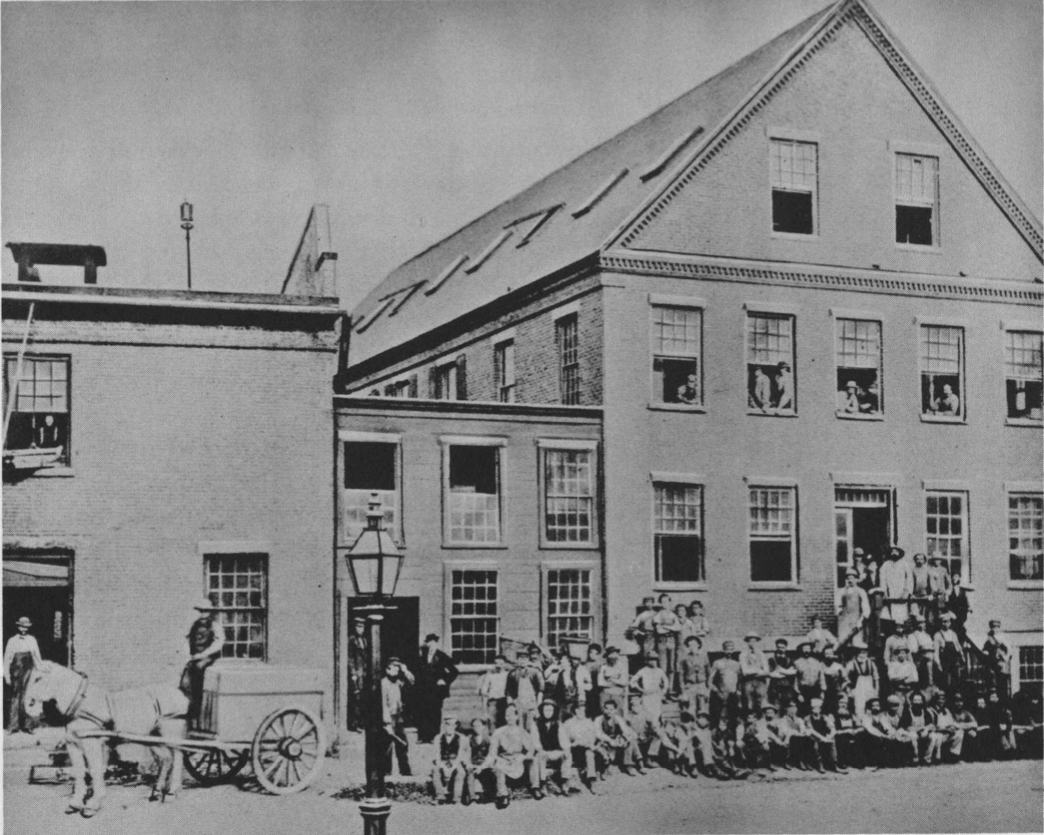
In the streets of Indianapolis, a German immigrant by the name of Clemens Vonnegut Senior took a brisk walk through the streets. Carrying heavy rocks in his hands, and his trademark cape billowing along behind him, Clemens did this regularly in all weather and times of day. Although strange, he had the reputation of being a fair and honest man. With his exceptionally strong work ethic, he founded and ran the Vonnegut Hardware Company…

Although a member of the famous Dupont family, Henry H. was quiet about it. He spent his days designing buildings and other, everyday items on paper. One of those everyday items was a design collaboration with his neighbor, mister Carl Prinzler…

Shortly after the events of the Iroquois Theatre fire, these three men would come together and create something that still saves lives this very day…

Posted in Von Duprin | Comments Off on The Von Duprin Game Changer, Part 1: The Power of Three

Triangle Shirtwaist Factory Fire, Part 3: Out Of Fashion, Into Compliance

As firefighters, police officers, and citizens who volunteered their efforts recovered bodies and lowered them to the ground below from the eighth, ninth, and tenth floors of the Asch building, people below were placing those bodies in to caskets and loading them on to wagons for transport.

The effects of the shirtwaist factory fire were heavy on all involved. Even the most hardened responders were overcome by emotion and grief. Crews were rotated out to give them time to temporarily recover.

Almost immediately after the fire, there were calls from the public for changes to life safety issues in manufacturing plants. Many of these changes were adopted and protect us even today. Continue reading

Posted in Triangle Shirtwaist Factory | Comments Off on Triangle Shirtwaist Factory Fire, Part 3: Out Of Fashion, Into Compliance

Triangle Shirtwaist Factory Fire, Part 2: Escape or Die

William Shepherd walked down the cobblestone streets in Greenwich village on the afternoon of Saturday, March 25th, 1911. It was a trendy place that any young reporter for the united press should be on a weekend. With an inclusive crowd, political activism, and a future home to Jackson Pollock it was, and still is, much like the Buckhead area of Atlanta, Lakewood in Cleveland, or the south end of Charlotte today. Counterculture, a diverse population, and an amazing night life lived in these stre…

*THUD*

William paused and shrugged when he heard the strange sound.

*THUD*

On Washington square in late Spring afternoon, it was such a strange sound to hear this loud thud with a sort of splat at the end.

*THUD*

Curious, William stopped after the third time he heard the sound. Looking up from the corner of Washington Square and Washington Place, he noticed a puff of smoke coming from the factory known as the Asch building.

*THUD*

“The first ten thuds shocked me. I looked up and saw that there were scores of girls at the windows. The flames from the floor below were beating in their faces.”

*THUD*

As William stood in shock, nearly fifty three women and girls jumped the 120 to 135 feet out of windows to escape the flames within the Asch building. Over a thousand people flocked from the nearby park and streets to try and help those escaping the Triangle Shirtwaist Factory while it was on fire. Out of nearly five hundred people in those three floors, one hundred forty-six would not live to see the next day. Over sixty of those souls chose to try jumping to escape, rather than die in flames. Continue reading

Posted in Triangle Shirtwaist Factory | Comments Off on Triangle Shirtwaist Factory Fire, Part 2: Escape or Die

Triangle Shirtwaist Factory Fire, Part 1: The Cost of Fashion

Today it’s difficult for us to imagine how a simple women’s garment, the Industrial Revolution, and labor practices could all be related. Right now, women wear t-shirts, polos, uniforms of all kinds, and dressy clothes on special occasions. But in 1911 the culture of New York City and the nation, was much different. Labor laws, women’s rights, and building codes all changed after a tragic disaster brought all of these different issues together.

Now, 112 years later, Jeff Moss, Tyler J. Thomas, and Tim Coleman will share with you the factors that led up to this disaster, and how building codes and the hardware that makes life safer changed as a result. Continue reading

Posted in Triangle Shirtwaist Factory | Comments Off on Triangle Shirtwaist Factory Fire, Part 1: The Cost of Fashion

How did ASSA and ABLOY get their names?

ASSA

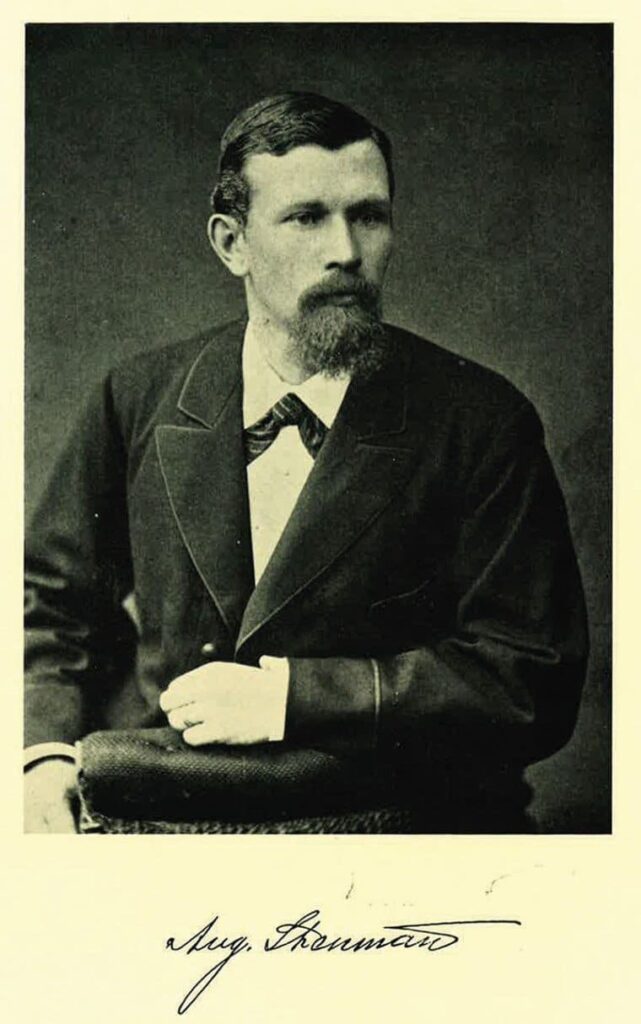
ASSA founder, August Stenman.

ASSA founder, August Stenman.

August Stenman, son of master craftsman Frans August Stenman, purchased the Thunell hinge manufacturing factory in Eskilstuna, Sweden in 1881 and created a new company, August Stenman AB, in the process. The new company was quite successful in developing automatic hinges and various screws in it’s early years. August Stenman AB began selling locks and keys in the first half of the 20th century under the ASSA name, which, according to legend, was drawn from August Stenman’s wife’s symmetrical, embroidered family monograms: August Stenman Stenman August, or ASSA. The company would officially rename itself Assa-Stenman AB in 1967.

ABLOY

Disc-detainer lock inventor, Emil Henriksson.

Disc-detainer lock inventor, Emil Henriksson.

In 1907, drawing from his work with cash registers, Emil Henriksson, a precision mechanic in Helsinki, Finland, invented the world’s first disc-detainer lock. This lock was patented in 1919 under the name Henriksson’s Patenttilukko, or “Henriksson’s Patent Lock”. Henriksson’s lock was manufactured by Ab Låsfabriken – Lukkotehdas Oy (a contraction of Swedish and Finnish), which was created in 1918 with shareholders Suomen Finanssiosakehtiö (34.5%), Emil Henriksson (25%, which was given in exchange for rights to his patent), Josef Nordqvist (20%) and Gösta Rosenberg (20%). Ab Låsfabriken – Lukkotehdas Oy was eventually shortened to Ab Lukko Oy and, shortly thereafter, the trademark ABLOY was derived from it. Continue reading

Posted in General History | Comments Off on How did ASSA and ABLOY get their names?

Lake View School, Collinwood Ohio, Part 4: A Village in Mourning

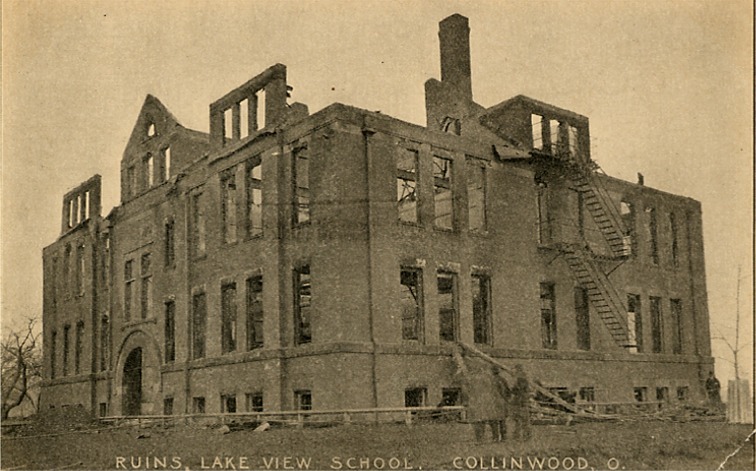
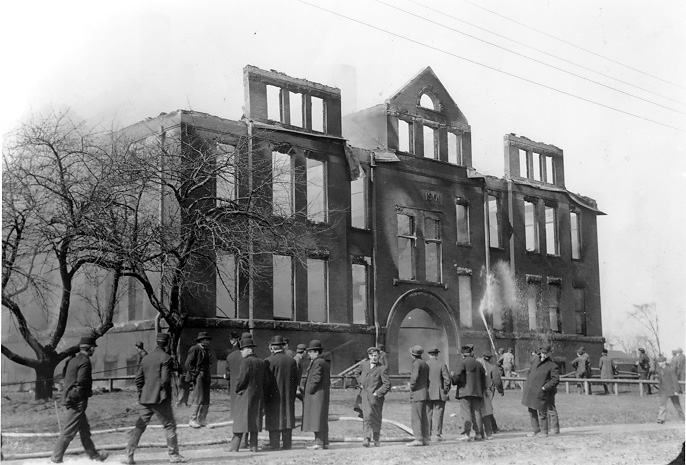
The Remains of the Lake View School.

The Remains of the Lake View School

The Investigation Begins

The very afternoon of the fire, investigations began. Fire Marshal Brockman interviewed the burned and bandaged Fritz Hirter on the grounds of the school. Fritz lost his eight-year-old Ida, and ten-year-old Walter, and had witnessed his thirteen-year-old daughter Helena burn to death inside the school. While there was some initial speculation that Hirter was somehow responsible for the blaze, this was quickly disputed and he was later hailed as a hero.

Official reports of the investigation have been lost to history, however according to news reports of the time and the book, “Complete Story of the Collinwood School Disaster, and How Such Horrors Can be Prevented” by Marshall Everett, 1908; no official cause was ever determined.

There was electrical wiring in the building, but that was ruled out. Also, the steam pipes leading from the boilers up through the school were reportedly wrapped in asbestos to insulate the wooden components of the structure from the intense heat. However, there were many identifiable factors to the large loss of life that were immediately apparent.

We have already mentioned and discussed the choke-points at the bottom of the stairs. Having any kind of narrowing at a point of egress not only causes a delay in getting out, but it almost certainly guarantees an outcome as we have discussed in this series. Those who are trying to escape can and will trip and fall; and those behind them don’t realize it until it’s too late and they fall on top of them.

That decision to build the partitions proved to be fatal. Continue reading

Posted in Lake View School | Comments Off on Lake View School, Collinwood Ohio, Part 4: A Village in Mourning

Did Jack Daniel really die after kicking his safe?

Born in Lynchburg, Tennessee, in either 1846, 1849, or 1850, Jasper Newton Daniel, better known as Jack Daniel, was a distiller who created the iconic Jack Daniel’s Tennessee whiskey brand.

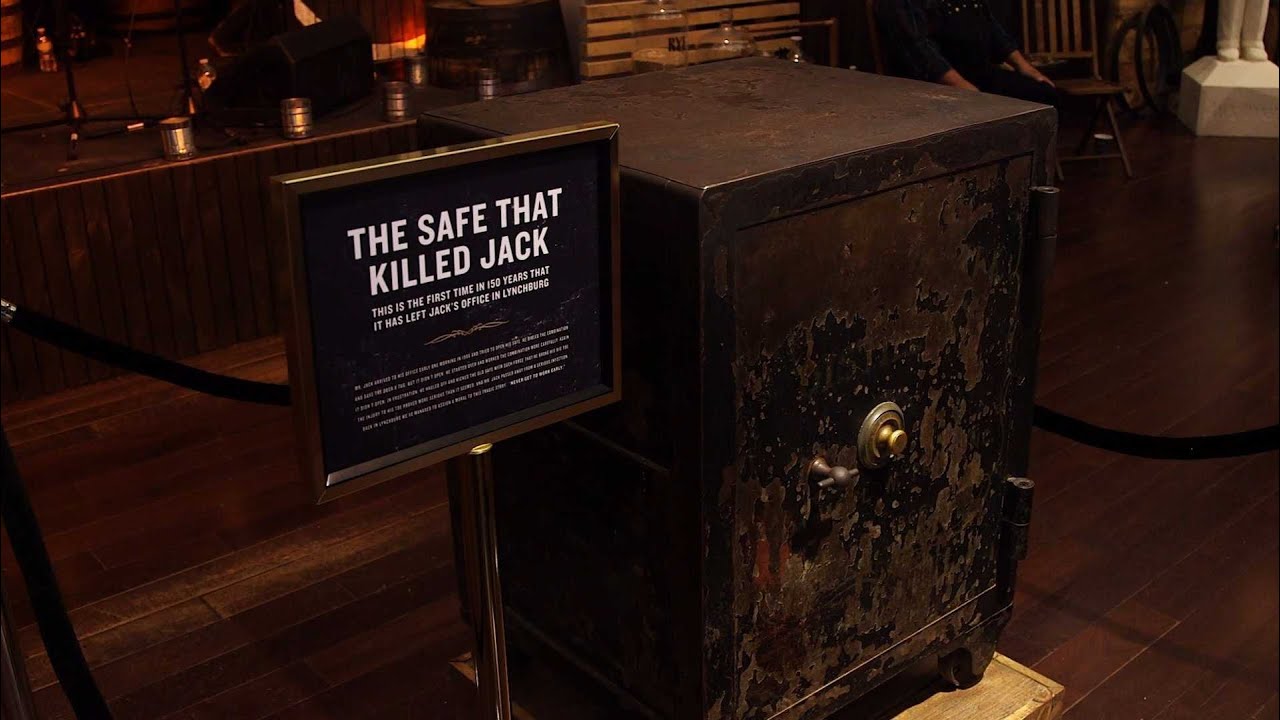
One of the most notorious stories associated with Jack is that, in a fit of rage, he kicked his safe, which led to a toe infection that eventually took his life. Jack Daniel’s website mentions this story and states, “After arriving at work early and unable to open his safe, Jack kicks it out of frustration and breaks his toe. The injury worsens and will eventually take his life.” The Jack Daniel’s Distillery tour features this story along with the actual safe and tour guides have been known to state that if Jack had simply dipped his infected toe into some of his whiskey, he could have saved himself.

Jack Daniel's Safe

Jack Daniel’s Safe

So did Jack Daniel really die after kicking his safe?

According to author Peter Krass, who wrote Daniel’s 2004 biography Blood & Whiskey: The Life and Times of Jack Daniel, Jack Daniel didn’t die after kicking his safe. While he had fits of rage towards the safe (it was well known that he always had trouble remembering his combination), the safe kicking incident happened years before Jack died and it was completely unrelated to what ultimately claimed his life: complications from gangrene. Continue reading

Posted in General History | Comments Off on Did Jack Daniel really die after kicking his safe?

Lake View School, Collinwood Ohio, Part 3: A Village on Fire

Firefighters work to extinguish the fire at the Lake View school.

Firefighters work to extinguish the fire at the Lake View school.


Author’s Note: The events we will be discussing occurred one-hundred-fifteen years ago. Many of the details have been lost to history. All attempts at accuracy have been made however, official records are often incomplete and media reports of the day are somewhat unreliable. A list of our source material will be provided at the end of this article.

A Village Reacts

In the streets near the school there were shouts and screams as the smell of smoke drifted through the air. People literally dropped what they were doing as others rushed by yelling at them that the school was burning. Twenty-four-year-old John Leffel is near the school and when he sees the smoke, he begins running as fast as he can to try and help save the children that were still trapped. The closer he gets to the building; the heat and smoke are so intense his eyes burn and it’s hard to breathe but he keeps running to the buildings rear entrance, hoping that it’s not too late.

“I ran to the school when I saw the smoke. The rear entrance, where the storm doors blocked up the arch, was heaped up with little bodies. I seized the first children I could reach and dragged them out. Some of the children seemed half suffocated. Some were unconscious. I did not stop to look. I seized them by the arms or legs or bodies and tossed them out behind.”

Andrew Dorn and Wallace Upton both live and work in the neighborhood and also run to the school. They each have children trapped inside and run to the back door as well. By the time the men are able to break free a stuck door, children are in a pile at the bottleneck of the bottom of the stairs. They are already starting to burn. Andrew finds his daughter, nine-year-old Gretchen, and tries desperately to pull her from the crush of children, dislocating both of her arms in the process but still cannot free her. He is finally forced to let go as he himself is starting to burn. Wallace manages to rescue eighteen children by pulling them from the heap, despite having second- and third-degree burns covering his arms. Only later does he learn that his own child was among the ones he managed to save. Continue reading

Posted in Lake View School | Comments Off on Lake View School, Collinwood Ohio, Part 3: A Village on Fire

How did DORMA, Kaba, and dormakaba get their names?

DORMA

On July 1, 1908, Dörken & Mankel KG was founded by Rudolf Mankel and his brother-in-law, Wilhelm Dörken in Ennepetal, Germany. The new company thrived from the very start and in 1913 they broke ground on a one-million plus square foot facility. The pair registered their new brand name, DORMA, with the German Patent Office in 1927. In 1936 Wilhelm left the company making Rudolf it’s sole proprietor. DORMA GmbH Co. KG was established in 1970.

Kaba

In 1862, Franz Bauer, along with three colleagues, established a manufacturing company in Zurich, Switzerland that specialized in safes and cash registers. One early safe model, the “Franz Bauer safe”, was so exceptional that it was displayed in the 1878 Exposition Universelle, or World’s Fair, in Paris, France.

Franz died in 1908 and left the company to his sons, Adolf, Carl, and Edwin, who renamed the company Franz Bauer Söhne AG. A stock corporation, Bauer AG, was created in 1915 and Leo Bodmer, an engineer and largest shareholder at the time, became the company president. In 1934, engineer Fritz Schori created the world’s first reversible key and patented the lock under the name Kassenbauer, or “cash register maker”,  in honor of the companies’ founder, who’s surname also meant “maker” in popular usage at the time, analogous to Smith in Anglo countries.

Kassenbauer was eventually shortened to Kaba and in 1975 Bauer AG was renamed Kaba Holding AG.

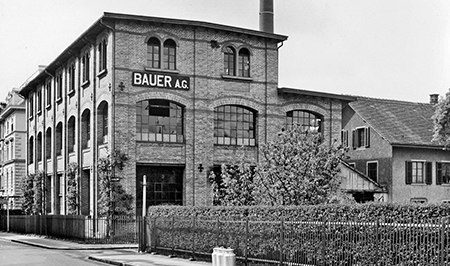
The Bauer AG factory.

The Bauer AG factory.

dormakaba

On April 30, 2015, DORMA, still owned by members of Rudolf Mankel’s family, announced it’s intention to merge with Kaba Holding AG to form dormakaba Holding AG. The merger was completed in September of that same year. Continue reading

Posted in General History | Comments Off on How did DORMA, Kaba, and dormakaba get their names?

Lake View School, Collinwood Ohio, Part 2: School on Fire

Lake View School on fire.

Lake View School on fire.

Author’s Note: The events we will be discussing occurred one-hundred-fifteen years ago. Many of the details have been lost to history. All attempts at accuracy have been made however, official records are often incomplete and media reports of the day are somewhat unreliable. A list of our source material will be provided at the end of this article.

The School Day Starts

Twenty-six-year-old Grace Fiske had entered the school well before her third grade students began arriving. Grace was born in New York, but later moved with her parents to Collinwood. Her father was a trimmer on a steam ship, and her mother was a housewife. Having become a teacher at age twenty-six is still not uncommon even today, nor is being unmarried and living with your parents. The house at 10522 Orville Avenue was only a few blocks away from the school so the daily walk was easy.

As her students began arriving a little after eight o’clock, there were the usual greetings and grumblings from students as they put away their coats and got their books, papers, and pencils ready. With forty-nine students, the room was completely packed. Over-crowding was a serious issue at Lake View. As we discussed in part one, the significant increase in population in such a short time led to issues throughout the village. Every classroom in the entire building was packed full. Even the third floor gymnasium that had been converted into classrooms was full of students. On that day in March, three-hundred-fifty students packed into a building that had been designed for only about two hundred. This forced teachers and staff to crowd the desks together and cram the kids in tight. Children were typically less than an arms length away from another classmate. This over-crowding also forced architects to build in additional wardrobe spaces in the school during the 1906 expansion. As a result, wardrobe rooms were constructed around the stairways as well. Continue reading

Posted in Lake View School | Comments Off on Lake View School, Collinwood Ohio, Part 2: School on Fire